About this project
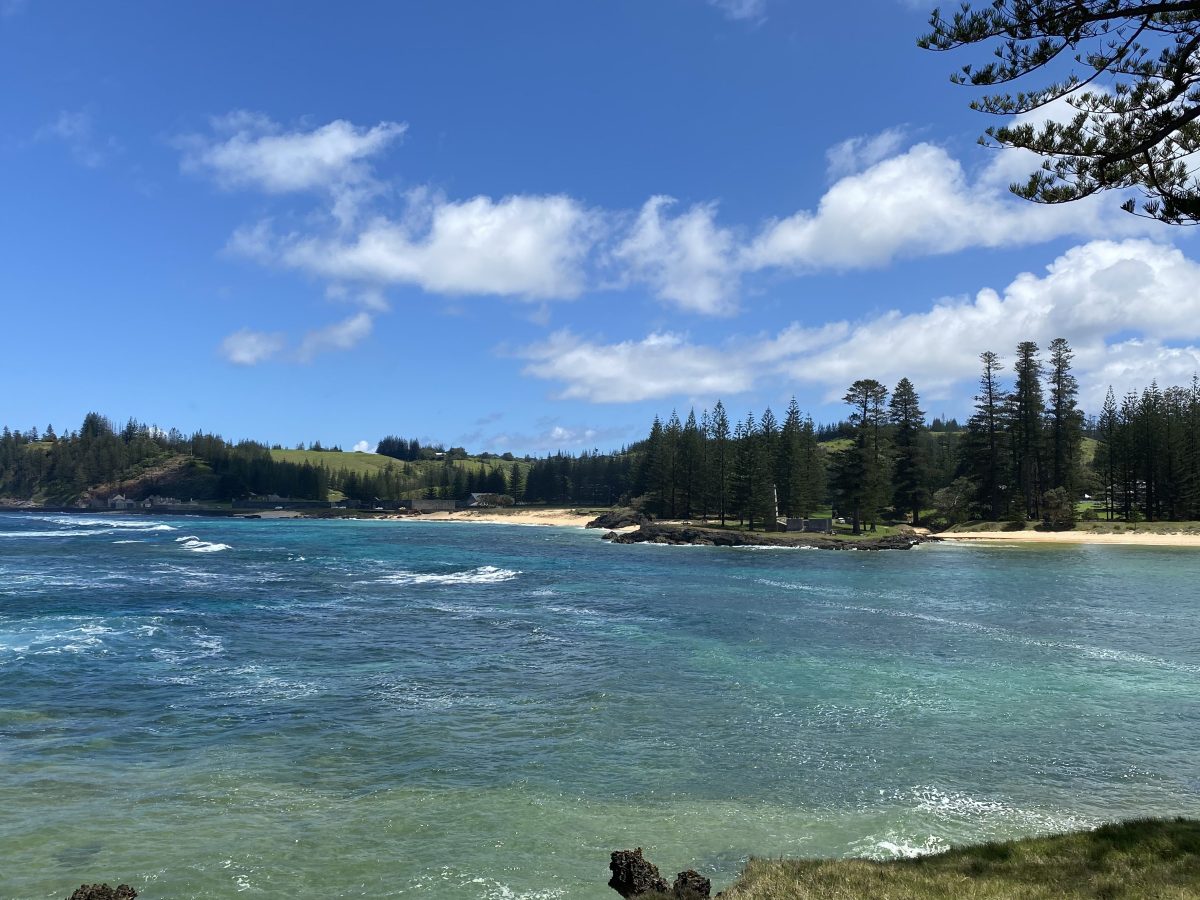
Norfolk Island is located in the Pacific Ocean, approximately 1,600 km northeast of Sydney, Australia. There is archaeological evidence of Polynesian occupation on Norfolk Island somewhere between c.1150 and c.1450. Other than that, Norfolk Island remained uninhabited until 1788–1814 when it hosted a British colonial settlement. The island was re-occupied as a penal settlement from 1825–1853, after which it had limited occupation in preparation for the 1856 arrival of settlers from Pitcairn Island who were descendants of Tahitian women and mutineers of HMS Bounty.
Pitcairn Settler heritage had long been downplayed in the presentation and interpretation of Norfolk Island’s UNESCO World Heritage Listed Kingston and Arthur’s Vale Historic Area (KAVHA). The Reimagining KAVHA project (2021–24) aimed to explore the role living heritage sites like KAVHA play in resisting or reinforcing cultural injustices. The research team worked closely with Pitcairn Settler descendants and others with long and deep connections to Norfolk Island to co-create eight public outputs (zines) that amplify experiences, feelings, attachments and memories associated with Kingston that may otherwise not be captured in traditional heritage management and interpretation practices. The project also produced a series of scholarly outputs published in peer-reviewed journals and other academic outlets.
Project Objectives
- To review and assess the policies, processes and practices that guide the management and interpretation of the KAVHA site;
- To generate knowledge as to the ways in which different local stakeholders understand, experience and engage with the KAVHA site;
- To build further capacity in the Pitcairn Settler descendant community to enhance a sense of ownership over their heritage and advocate for the preservation of their culture;
- To produce a zine series, co-created with Pitcairn Settler descendants, which will provide a record of how Pitcairn Settler heritage is lived and experienced on Norfolk Island;
- To produce a self-guided heritage walk pamphlet that overlays Pitcairn Settler heritage onto the KAVHA site;
- To produce a policy report which sets out a series of recommendations as to how heritage initiatives and tourist attractions on Norfolk Island can be designed or adapted to produce cultural justice outcomes for Pitcairn Settler descendants;
- To build research capacity in the field of critical heritage studies through fostering the development of research track records of two early career researchers.